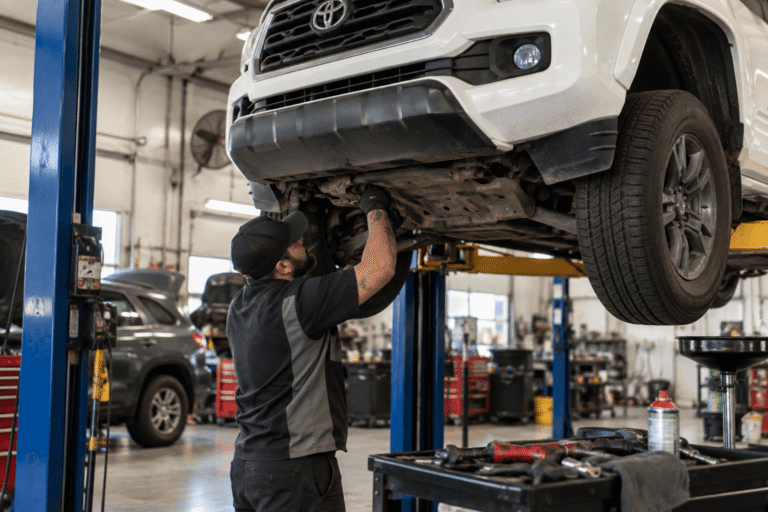

Parker Automotive checks and replaces serpentine belts, timing belts, and coolant hoses at our Tucson shop. Desert heat dries out rubber fast. A worn belt or leaking hose can leave you stuck with an overheated engine. Our ASE-certified techs catch it early, and repairs carry our 36-month, 36,000-mile nationwide warranty.
Why Choose Parker Automotive for Belts and Hoses Service
Are your belts and hoses due for inspection or replacement in Tucson, AZ? Parker Automotive has handled auto repair in Tucson since 1995. We keep your vehicle running and help you avoid costly breakdowns.
Whether it’s a worn serpentine belt or a cracked coolant hose, we fix what your vehicle needs. We look for the most affordable fix every time.
- Nationwide warranty: 36 months or 36,000 miles on parts and labor
- Easy drop-off: a free shuttle and after-hours drop-off
- Pay over time: auto repair financing through Synchrony
- Certified team: ASE-certified techs, led by an ASE Master shop foreman
Why Tucson Heat Makes Belt and Hose Inspections Important
Regular checks of your belts, hoses, and radiator help you avoid costly repairs. Tucson heat wears out rubber parts and makes them crack. Your serpentine belt runs the A/C compressor, and your hoses carry the coolant that keeps the engine from overheating. Both work hardest in July.
Consumer Reports calls hoses the weakest part of the cooling system. Summer heat under the hood breaks down rubber even faster.
Bring your vehicle in for our multi-point vehicle inspection. It always includes a check of your belts and hoses for cracks, fraying, and leaks.
What Happens When a Belt or Hose Fails
- Serpentine belt breaks: You can lose charging power, power steering, and A/C. On many engines, the water pump stops too, and the engine overheats.
- Coolant hose leaks or bursts: The engine loses coolant and pressure, then overheats.
- Timing belt breaks: The engine shuts off. On many engines, it also causes major internal damage that needs engine repair.
If a belt breaks while you drive, pull over and shut off the engine.
Types of Belts and Hoses in Your Car
Your car or truck has several belts and hoses. Each one powers or cools a different system. These are the belts and hoses that keep everything running:
- Serpentine belt: One long ribbed belt. On most newer cars, it drives the alternator, water pump, power steering pump, and A/C.
- V-belts (fan belts): Older vehicles use two or more separate belts to drive the fan and other accessories.
- Timing belt: A toothed belt inside the engine that links the crankshaft to the camshaft. It keeps the valves and pistons in sync. Some engines use a timing chain instead. Your owner’s manual tells you which one you have.
- Radiator hoses: Two hoses move coolant from the engine to the radiator and back.
- Heater hoses: Smaller hoses carry hot coolant to the heater core.
- Other hoses: More hoses carry power steering fluid, transmission fluid, brake fluid, and fuel.
Signs of Worn Belts and Hoses
Follow the maintenance schedule in your owner’s manual to avoid most problems. Also watch for these warning signs:
- Squealing or chirping from the front of the engine
- A shiny, glazed look on the belt
- Cracks, fraying, or missing chunks on the belt
- A burning rubber smell, which can mean a belt is slipping
- Cracks near the ends of a hose
- Hoses that feel soft, swollen, or brittle
- Coolant puddles under the car or a sweet smell after driving
- A temperature gauge that climbs higher than normal
- A battery light, weak A/C, or heavy steering
Heat and mileage harden rubber over time. A loose belt also wears faster because it slips and builds friction.
A Belt Can Look Fine and Still Be Worn
Most newer serpentine belts use a rubber called EPDM. These belts rarely crack. Instead, they lose material from the ribs, much like a tire loses tread. Belt maker Gates warns that as little as 5% rib material loss can cause problems. That is why we check the belt’s rib wear, not just its surface.
How Often to Replace Belts and Hoses
Your owner’s manual lists the exact timing for your car. These general rules help you plan:
- Serpentine belt: The Car Care Council puts typical replacement at 60,000 to 90,000 miles.
- V-belts: Typical replacement is 40,000 to 50,000 miles.
- Timing belt: Replace it at the interval your owner’s manual lists. Don’t wait for symptoms, since a broken timing belt can damage the engine.
- Hoses: Most owner’s manuals list no set interval. Have them checked at each oil change, and replace any that show wear.
Gates recommends checking belts for wear starting at 60,000 miles. In Tucson heat, earlier checks make sense.
Belt and Hose Replacement Services
Our technicians replace timing belts, serpentine belts, V-belts, and radiator and heater hoses. We install name-brand parts that hold up in desert heat.
When we replace a serpentine belt, we also check the tensioner and pulleys. The Car Care Council notes that these parts wear at the same rate as the belt. A worn tensioner can ruin a new belt early.
We want every Tucson driver to leave happy.
Benefits of Regular Belt and Hose Maintenance
Regular belt and hose care helps you avoid big repair bills and roadside breakdowns. A good belt keeps your alternator charging and your A/C blowing cold. Our maintenance services include oil changes, filter replacements, and belt and hose checks.
Other Auto Repair Services
We fix more than belts and hoses. Many belt and hose problems tie into other systems we repair:
- Auto A/C repair for weak or warm air
- Alternator repair and replacement when the battery light comes on
- Fuel system repair for leaks and power loss
- Transmission repair and tire replacement
We also replace worn wiper blades during maintenance visits. We work on American and Asian makes.
Belt and Hose Service for Cars, Trucks, Vans, and SUVs
Our mechanics work on passenger cars, medium-sized trucks, minivans, and SUVs. Our shop sits at 5101 E. Speedway Blvd. We serve drivers in Midtown, Central Tucson, the Catalina Foothills, Casas Adobes, and East Tucson.
Belts and Hoses FAQs
What are the main belts in a car?
Most cars have a serpentine belt and a timing belt or timing chain. Older vehicles use several V-belts in place of one serpentine belt.
How often should belts and hoses be replaced?
Serpentine belts typically last 60,000 to 90,000 miles. Replace timing belts on your owner’s manual schedule. Hoses usually have no set interval, so get them checked at each oil change.
How much does belt and hose replacement cost?
Cost depends on your vehicle and which parts need work. A serpentine belt is often a quick job. A timing belt takes more labor because parts of the engine must come apart. We give you a clear quote after we inspect your vehicle.
Is it safe to drive with a squealing belt?
A squeal often means the belt is slipping or worn. You may be able to drive short distances, but get it checked soon. If the belt breaks, you can lose power steering and overheat the engine.
Do I need an appointment?
An appointment helps us plan your day, but it is not always required. We also offer after-hours drop-off and a free shuttle.
Schedule Your Belt and Hose Inspection
Call (520) 323-1960 or book your belt and hose inspection online. We’ll check your belts and hoses and explain what needs work before we start.
Check our current auto repair specials before your visit.